The line for immigration bends twice before you can see where it ends. It is a little before eleven at night, the hall smells of floor polish and cold air, and the flight behind you was long. The queue is longer than it looks, because it folds back on itself, and every folded traveler is as tired as you are.
Nobody photographs this part. The arrival people picture is the one from the window seat: the coastline, the neon, the first bowl of ramen. The real arrival is a fluorescent hall at night and a run of small decisions you were too tired to make in advance.
Landing late in Tokyo is easy. Landing late without a plan for the next three hours is where an evening comes apart. Here is how those hours actually run, and the handful of small things that keep them dull instead of memorable for the wrong reasons.
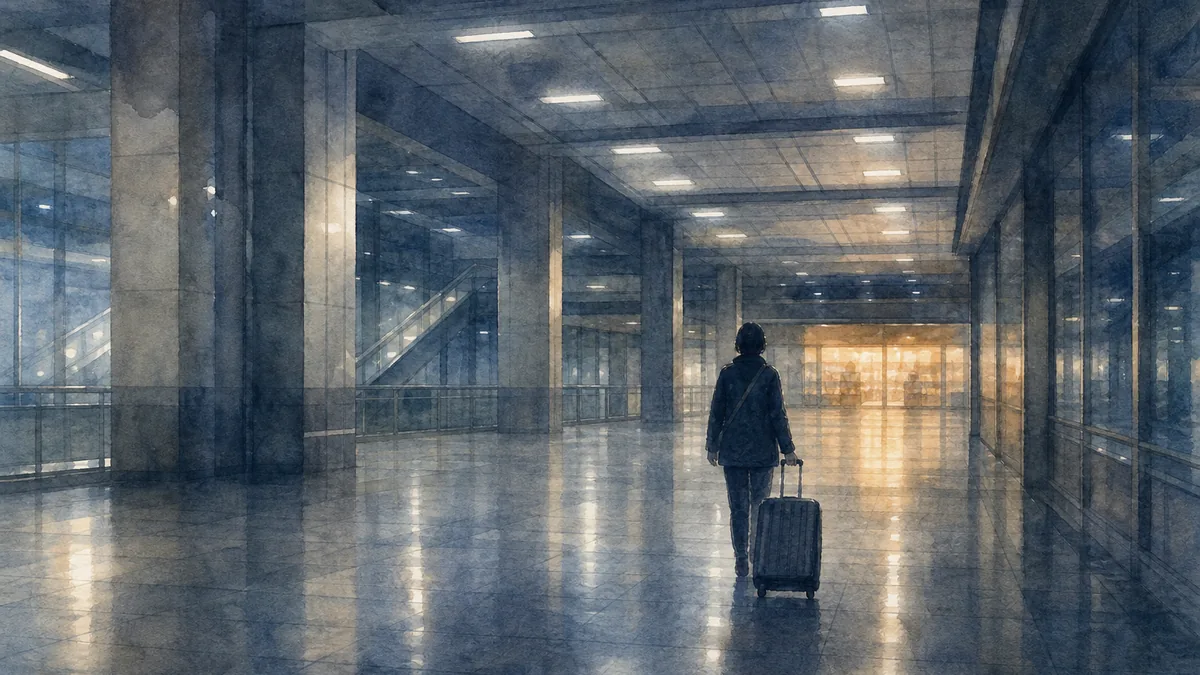
The airport at eleven at night
A late flight lands into a quiet airport. Most shops are shuttered, the currency counters are down to a single lit window, and the staff are working through the day's last arrivals. Immigration and customs still take their time. On a busy night the queue can swallow the better part of an hour before you reach a booth, and hurrying does nothing to move it. That is not pessimism: Japan's Immigration Services Agency sets itself a twenty-minute target, publishes month by month how often it hits it, and separately publishes the share of visitors who waited an hour or more on that month's busiest day. The second figure exists because the queue does.
So plan for the clock you cannot see. The arrival time on your itinerary is when the plane reaches the gate, well before you walk out with your bag. Stacked between the two are the corridor to immigration, the queue, the belt, and customs. Budget ninety minutes from landing to the moment you stand in the arrivals hall, and treat anything faster as a gift. That gap matters, because the trains keep their own schedule and will not wait for yours.
Into the city, or as far as the trains will take you
Both of Tokyo's airports connect to the city by rail, and both run a last train that leaves earlier than a jet-lagged traveler expects. Miss it, and the tidy route map on the wall quietly stops being a choice.
Trains stop earlier than a tired traveler expects. Before you fly, look up the last departure for your route on your arrival date, on the rail or airport operator's own site, not a figure copied into a blog. Timetables change, and a flight that lands after midnight can easily land after the last train has already gone.
You have three ways in, and the right one depends on the hour on the arrivals-hall clock:
- The airport train is the fastest and cheapest way in while it is still running. Confirm the final departure for your line and date on the operator's site, because if your flight is the one that lands late, this option may already be closed.
- The airport limousine bus runs later on some routes and sets down at major hotels, which is gentle on anyone with a big suitcase and no wish to transfer. Haneda, for instance, has late-night departures to Shinjuku and Ikebukuro leaving the airport between midnight and 2 a.m. Seats and late departures still sell out and shut down for the night, so check the current schedule with the bus operator.
- A taxi is the option that always works and always costs. From either airport into central Tokyo it is a long metered ride, and the late-night surcharge starts earlier than most arrivals expect: in Tokyo it applies from 10 p.m. to 5 a.m. and adds roughly 20 percent. Treat a taxi as the fallback you pay for rather than the plan.
Whichever you choose, the decision gets made standing in the arrivals hall with a phone in your hand: last-train times, the bus timetable, the walk from the station to a door you have never seen. That is the first sign that your phone is the one piece of equipment that has to be working the moment you land. If you are still weighing how to stay online, the guide on eSIM versus pocket WiFi for Japan covers the trade-offs.
If you miss the last train
Say the queue was long and the last train has gone. This is not an emergency. It is one of the most common ways a Tokyo trip begins, and the airport is set up for people it happens to.
Your choices narrow to three. You can wait for the first morning train in the arrivals area, which plenty of travelers do, dozing on a bench. You can take the limousine bus, if a late route still serves your part of the city. Or you can take a taxi and simply pay for the hour the queue cost you, which is the priciest way to end the night but the surest. Not one of these wrecks a holiday; they cost money or a few hours of sleep, and knowing that in advance is the whole difference between a shrug and a bad spiral at a locked door.
The one move that fails is arriving at a small hotel at one in the morning and expecting someone to be standing at the desk.
The desk that closes before you arrive
Hotels are not all awake when you are. A large business hotel or a capsule usually keeps the front desk staffed late, sometimes around the clock, and a midnight check-in barely registers. A small guesthouse or a family-run inn often locks up and sends the last clerk home by ten or eleven. Turn up after that, and there may be no one to hand you a key.
The fix costs one message. Before you fly, tell your hotel roughly when you expect to arrive, and ask what happens if you are late. A well-run property will give you its desk hours, leave a key in a lockbox, or send an entry code. That single question, sent a few days ahead, quietly removes the worst version of the arrival night: a suitcase, a quiet street, and a door that will not open. For the other bookings that go sideways long before you land, it is worth reading the common Japan booking mistakes on their own.
The konbini, and the small room
You made it. The door opened, the key worked, and the room is smaller than the photo suggested, because the photo was taken from the one corner where it looks bigger. This is normal. Tokyo rooms are compact by design, and a business-hotel single is a neat machine for sleeping rather than a suite you settle into.
Before you climb the last flight, keep one ritual: the convenience store run. A konbini is rarely far, it stays open, and near midnight it is the warmest light on the street. Water, a hot meal from behind the counter, a toothbrush if yours is in a suitcase you forwarded ahead, a coffee set aside for the morning. That is the real reason a late arrival is survivable even when your big bag is not with you: the essentials are three minutes away, all night. You carry the small bag up, put it down, and the trip has finally, actually started.
Three things to set before you fly
The arrival night is decided weeks earlier, at a desk at home, by three small tasks. None of them takes ten minutes.
- Send the hotel your arrival time. One message about a late check-in, sent before departure, settles whether the desk is open or the door is locked when you get there.
- Save the route offline. Screenshot the airport train and bus timetables, the last departures for your date, and the walk from your station to the hotel door. Airport Wi-Fi is uneven, and a saved map asks nothing of the network.
- Arrive connected. Have your data live the moment you step off the plane, whether that means an eSIM or a rented pocket WiFi. Every choice on the arrival night, train or bus or taxi, correct exit or wrong one, gets made on a phone that already works.
Do those three, and the immigration hall near midnight becomes what it should be: a slow, dull, unremarkable hour between a plane and a bed. The queue still folds twice. You still stand in it. But the last train time is on your screen, the desk is expecting you, and the walking route is already saved. You step out into the quiet street, find the konbini's light, and go the way you decided on weeks ago.
References
- Narita Airport — access and ground transport (official): narita-airport.jp/en/access/
- Haneda Airport — access to and from the airport (official): tokyo-haneda.com/en/access/
- Tokyo Hire-Taxi Association — fare FAQ, and Tokyo Personal Taxi Association — how fares work (late-night surcharge: 10 p.m.–5 a.m., 20%). Accessed 2026-08-01.
- Airport Limousine (Tokyo Airport Transport Service) — Haneda late-night and early-morning access buses. Accessed 2026-08-01.
- Immigration Services Agency of Japan — airport immigration waiting times (monthly figures; the agency's target is 20 minutes, and it also publishes the share of visitors waiting 60 minutes or more on each month's busiest day). Accessed 2026-08-01.